Loading...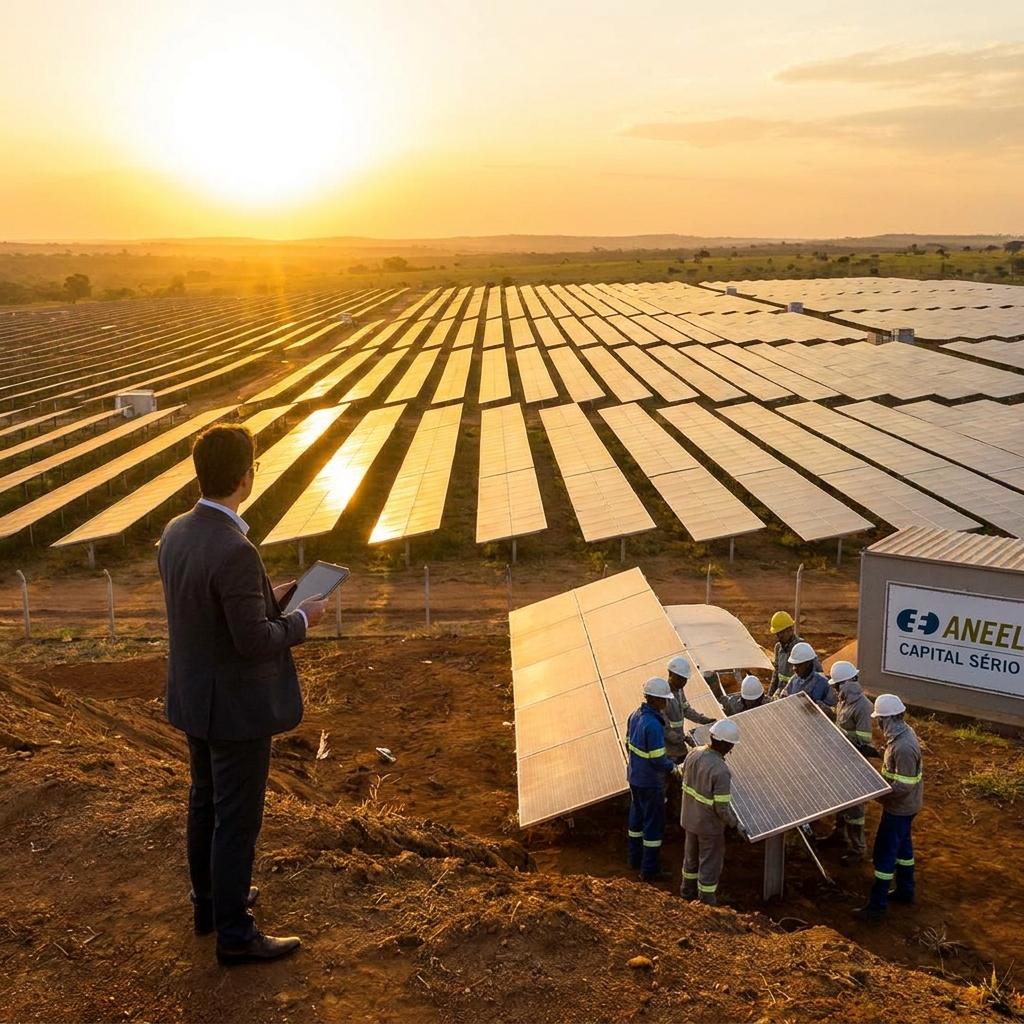
Last week, Brazil's electricity regulator Aneel denied Newen Energia's request for a liability exemption after a three-year delay on its solar PV portfolio, signaling the likely revocation of the company's generation grants (outorgas).[1] The immediate reaction across WhatsApp groups and deal desks was predictable: another sign that Brazil is hostile to renewables capital. That reading is exactly wrong. What Aneel just did is the single most constructive thing a Latin American regulator could do for serious project finance sponsors—it started clearing the queue of paper projects that have been choking Brazil's transmission grid for years.
The Paper Project Problem Aneel Just Addressed
For the better part of this decade, a familiar playbook emerged in Brazilian solar development: secure a generation grant from Aneel, lock up a grid connection agreement (CUST/CUSD), and then sit on both while waiting for panel prices to drop, a better PPA to materialize, or—most cynically—a buyer willing to pay a premium for the queue position itself. When timelines slipped, developers would invoke force majeure, citing global supply chain disruptions or grid interconnection delays, and Aneel would largely accommodate.
Newen Energia appears to have run that playbook to its logical conclusion—and Aneel finally said no. The regulator rejected the force majeure defense outright, establishing that a three-year delay cannot be rationalized away as an extraordinary circumstance beyond the developer's control.[1] The precedent is stark: generation grants are now perishable assets. Miss your Commercial Operation Date, and the underlying regulatory authorization that makes your project bankable can evaporate.
The Newen denial doesn't increase risk for capitalized developers. It reduces it—by freeing limited transmission capacity that speculative holders were warehousing without any intention of deploying steel in the ground.
This Is Part of a Coordinated Enforcement Pattern, Not an Isolated Decision
Read the Newen decision in isolation and you might see regulatory capriciousness. Read it alongside the last two weeks of Aneel board actions and the pattern is unmistakable. The same board denied appeals from J&F and UEG Araucárias in the Capacity Reserve Auction (LRCAP),[3] while simultaneously qualifying 13 compliant thermal plants totaling 2.18 GW for the 2026 reserve product.[4] The message: execute on time and you get cleared. Delay, and the regulator will reallocate your capacity to someone who will.
Perhaps most telling, Aneel leadership took the unusual step of meeting directly with investment analysts to outline the regulatory agenda—deliberately bypassing operators to communicate with capital markets.[5] That is not the behavior of a regulator acting erratically. It is a regulator telling lenders and sponsors: we are making this market more predictable, not less.
Even the headline-grabbing Enel lawsuit—in which Grupo Enel is suing an individual Aneel director for moral and material damages, now escalated to Federal Court[2]—reinforces rather than undermines the thesis. Enel's decision to go nuclear against a regulator executing a concession enforcement mandate suggests the financial pressure on under-performing concessionaires is real and growing. But personal lawsuits against directors will not reverse the regulatory trajectory. If anything, they will harden Aneel's institutional resolve.
What This Means for Lenders and Foreign Sponsors
For project finance desks—BNDES, BNB, commercial banks, and the growing cohort of international infrastructure credit funds looking at Brazil—the Newen decision requires an immediate recalibration of how outorga risk is modeled.
Previously, generation grants were treated as relatively stable regulatory assets in condition precedent (CP) checklists. The working assumption was that Aneel would extend timelines when developers presented reasonable justification. That assumption is now empirically invalidated. Lenders must stress-test mid-development revocation scenarios: what happens to debt service coverage if the grant is pulled 18 months into construction? What is the recovery value of a partially built solar farm with no regulatory authorization to inject power?
For well-capitalized sponsors who can meet COD timelines, this is unambiguously positive. A thinner, more disciplined transmission queue means faster interconnection, fewer curtailment risks, and a regulatory environment that rewards execution over optionality.
The developers who should be concerned are the ones carrying thin balance sheets, multiple stalled projects, and a business model built on flipping grants rather than building plants. For everyone else—including the international sponsors this column has consistently argued are being invited into Brazil's infrastructure market—the Newen precedent is a feature of the new regime.
What to Watch Next
Three developments will determine whether this enforcement posture holds or softens. First, monitor the specific Aneel administrative process for Newen to see whether the company appeals to the Federal Court or seeks an injunction—and whether any court grants a stay of the revocation. Second, track the Enel-versus-Aneel-director litigation for any indication that judicial intervention could chill individual regulatory decision-making. Third, watch the next LRCAP qualification round: if Aneel continues to deny appeals from non-compliant developers while clearing compliant ones, the pattern becomes institutional doctrine rather than a one-off board decision.
Brazil's energy transition doesn't need more megawatts on paper. It needs megawatts connected to the grid, backed by real capital, on schedule. Aneel appears to finally agree.
References
- "Aneel nega pedido da Newen Energia após atraso de três anos em solares," MegaWhat, 5 May 2026. Link
- "Ação da Enel contra diretor da Aneel vai para a Justiça Federal," O Dia, 4 May 2026. Link
- "Diretoria da Aneel nega recursos da J&F e UEG Araucárias no leilão de reserva de capacidade," Reporter Diário, 1 May 2026. Link
- "Aneel habilita 2,18 GW em térmicas do LRCap 2026," MegaWhat, 1 May 2026. Link
- "ANEEL dialogou com analistas econômicos para sinalizar agenda regulatória do setor elétrico," Urbano Vitalino, 1 May 2026. Link